

Checkmate Bloods
Fertility Hormones Blood Test
Fertility Hormones Blood Test
Couldn't load pickup availability
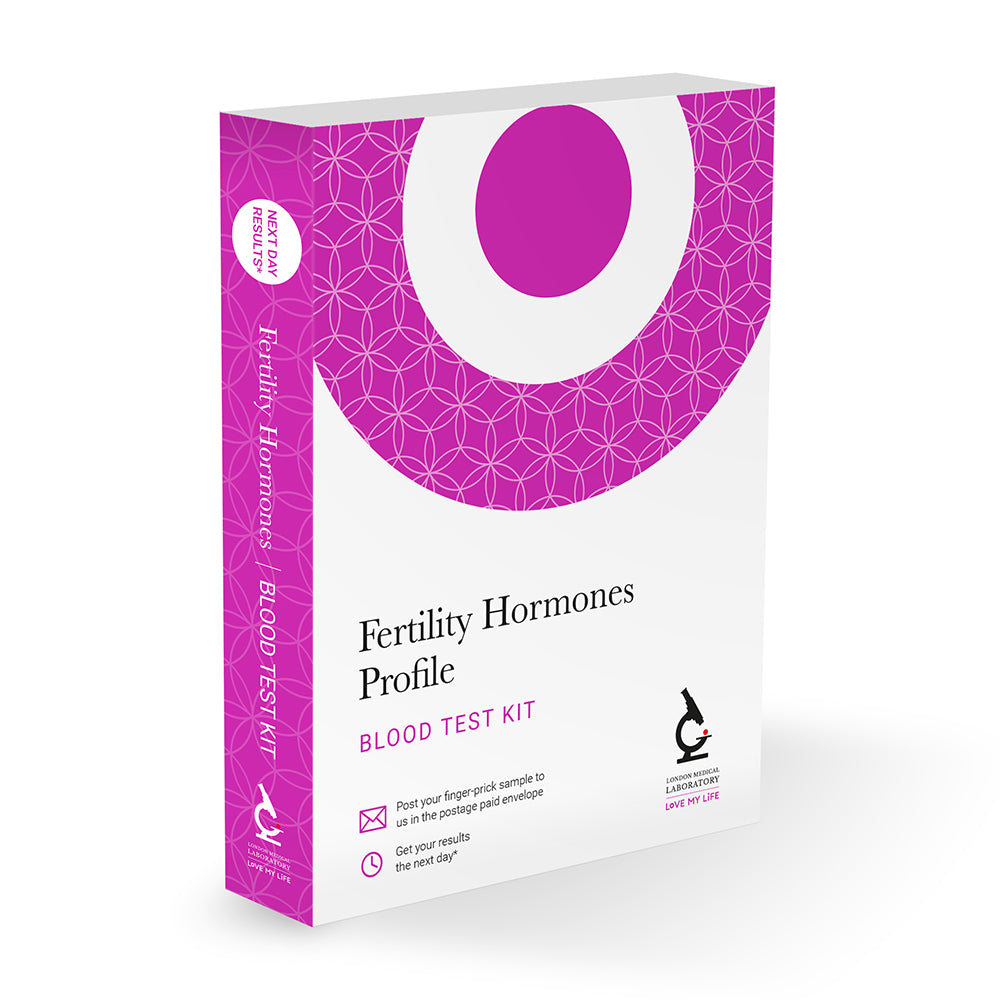
Discover insights into your reproductive health with our Fertility Hormones Blood Test. This comprehensive panel measures key hormones—oestradiol, follicle stimulating hormone, luteinising hormone, prolactin, and testosterone—to help identify potential fertility issues. Understanding your hormone levels empowers you and your healthcare provider to make informed decisions on your fertility journey. Take control today with a simple blood test designed to provide clear, actionable results.
What's in the box?
What's in the box?
📝 Instructions
💧 Pre-injection swab
🩸 Lancets
🧪 Microtainers
📦 Pre-paid return envelope
Shipping policy
Shipping policy
Orders placed before 1pm (Monday–Friday): Shipped same day
Orders after 1pm or on weekends: Shipped the next working day
🔁 Easy Returns Included
Your test kit comes with a pre-paid Royal Mail Tracked 24 return label inside the box — no printing, no fuss. Just pop your completed sample in the post using any Royal Mail Priority Postbox.
Returns Policy
Returns Policy
🛑 Need to cancel?
You’ve got 14 days.
Cancel before dispatch = full refund.
Cancel after = refund minus £10 kit fee.
- Fast shipping
- speedy results
- Doctor's report
Share
What's tested?
Testosterone
Testosterone is an important sex hormone for both men and women. In men, it is made in the testicles. In women, it is made in small amounts in the ovaries.
It is important for normal male sexual development. During puberty (in the teen years), testosterone helps boys develop male features like body and facial hair, a deeper voice, and muscle strength. Too much testosterone in men can cause shrinking of the testicles, impotence, an increased risk of heart attack and prostate enlargement with difficulty urinating. Too little can cause fatigue, irritability, depression, erectile dysfunction and reduced muscle mass.
Combined with oestrogen, testosterone helps with the growth, maintenance, and repair of a woman's reproductive tissues and bone mass. Too much can cause acne, excess hair on the face and body, irregular periods and mood changes. Too little can cause low libido and weight gain.
The optimal time to take a sample when testing for testosterone is between 7am - 10am.
Luteinising Hormone
Luteinising hormone (LH) plays a key role in regulating the reproductive system in both men and women.
In women, LH helps control the menstrual cycle and triggers ovulation — the release of an egg from the ovary. Abnormal levels can indicate issues like polycystic ovary syndrome (PCOS), irregular periods, or problems with fertility.
In men, LH stimulates the testes to produce testosterone, which is essential for sex drive, muscle mass, mood, and sperm production. Low LH levels can point to hormonal imbalances or problems in the pituitary gland.
Abnormally high or low levels of LH can indicate various health issues, including hypogonadism, pituitary gland disorders, or issues with the testes. Therefore, maintaining a balance in LH levels is important for overall health and well-being in women and men.
Follicle Stimulating Hormone
Follicle-stimulating hormone (FSH) is a gonadotropin, a type of hormone produced by the pituitary gland, which plays a crucial role in the reproductive systems of both men and women.
In women, FSH is key to the menstrual cycle and fertility:
Ovarian Follicle Development: FSH stimulates the growth of ovarian follicles in the ovary before the release of an egg at ovulation.
Oestradiol Production: The developing follicles produce oestradiol, an oestrogen, which is crucial for the reproductive cycle.
Menstrual Cycle Regulation: FSH levels vary throughout the menstrual cycle and are highest just before ovulation.
In men, FSH is essential for the production and health of sperm:
Sperm Production: FSH stimulates the Sertoli cells in the testes, which are crucial for spermatogenesis (the production of sperm).
Testicular Health: It helps maintain the size and health of the testes.
FSH levels are used as an important diagnostic tool in assessing fertility and reproductive health. In women, abnormal FSH levels can indicate issues such as ovarian failure, polycystic ovary syndrome (PCOS), or menopause. In men, abnormal levels can indicate problems with the testes or with the hypothalamic-pituitary-gonadal axis, which can affect sperm production and overall fertility.
Monitoring FSH levels can provide valuable information in the evaluation and treatment of infertility, as well as in understanding other reproductive health issues.
Oestradiol
Oestradiol is a form of oestrogen, which is a female sex hormone. It plays a crucial role in the development and functioning of female reproductive tissues, such as the breasts, ovaries, and uterus. Oestradiol is also important in regulating the menstrual cycle and reproductive system.
In addition to its role in the reproductive system, oestradiol has other significant functions. It helps maintain bone density, supports cardiovascular health, and influences mood and cognitive function. The hormone is produced primarily in the ovaries in premenopausal women and is also produced in smaller amounts by other tissues such as the adrenal glands, fat tissues, and the brain, both in women and in men.
Levels of oestradiol vary throughout a woman's life, being highest during the reproductive years and dropping significantly after menopause.
Testing oestradiol levels can be important for various reasons, such as evaluating fertility, understanding the causes of menstrual irregularities, assessing menopausal status, or monitoring hormone replacement therapy.
Low levels can lead to symptoms such as hot flashes, night sweats, and osteoporosis, while unusually high levels may indicate conditions like ovarian tumours or oestrogen dominance.
Oestradiol, although typically associated with women, also plays important roles in men's health. In men, oestradiol is produced mainly by the conversion of testosterone through the action of an enzyme called aromatase, which is present in fat tissues, the brain, testes, and other tissues.
The functions of oestradiol in men include bone health, fertility, brain function, cardiovascular health, fat metabolism and muscle health.
While high levels of oestradiol in men can lead to problems such as gynecomastia (development of breast tissue), erectile dysfunction, and infertility, very low levels are also problematic, as they can increase the risk of osteoporosis and other health issues. Therefore, maintaining a balance of oestradiol is important for overall health in men.
Prolactin
Prolactin is a hormone made by the pituitary gland that plays a key role in reproductive health.
In women, it’s essential for breast development and milk production, but high levels outside of pregnancy can disrupt ovulation and periods.
In men, prolactin helps regulate testosterone levels and fertility.
High prolactin levels (hyperprolactinaemia) can cause:
- Irregular or absent periods
- Infertility
- Breast milk production when not pregnant or breastfeeding
- Low libido or erectile dysfunction in men
- Headaches or vision changes (in rare cases, due to pituitary tumours)
Low prolactin is rare but may be linked to underactive pituitary function.